
Immunotherapy has transformed the treatment landscape for several types of cancer. It is a modern form of cancer treatment that helps the body’s immune system recognize and respond to cancer cells..
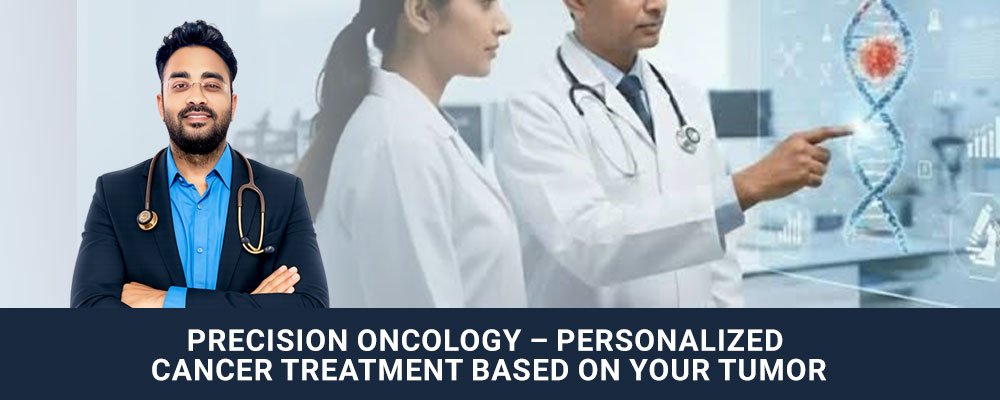
Traditionally, cancer treatment decisions were largely based on the location and stage of the tumor. Today, advances in pathology, molecular diagnostics, genomic testing, and cancer biology allow doctors to understand cancer at a much deeper level.
Precision oncology uses this information to help identify treatment options that may be appropriate for selected patients.
What Is Precision Cancer Care?
Every cancer is different, even when two patients have cancer in the same organ. Tumors may contain different genetic alterations, proteins, biomarkers, and biological pathways.
Precision oncology considers these differences when making treatment decisions.
Depending on the type of cancer, precision cancer care may involve:
- Detailed pathology review
- Immunohistochemistry
- Biomarker testing
- Molecular testing
- Tumor profiling
- Genetic and genomic analysis
- Assessment of treatment history
- Evaluation of the patient’s overall health
The information obtained from these investigations can help the oncology team understand the biological characteristics of the tumor.
Precision Oncology and Targeted Therapy
Precision oncology is closely associated with targeted cancer therapy. If testing identifies a molecular alteration for which an appropriate targeted medicine is available, the oncologist may consider that therapy as part of the treatment plan.
However, finding a genetic or molecular alteration does not automatically mean that a specific treatment will be beneficial. The result must be interpreted in the context of the patient’s cancer, clinical condition, available evidence, and approved treatment options.
Precision Oncology and Immunotherapy
Precision approaches can also help determine whether certain patients may be candidates for immunotherapy. Depending on the cancer, specific biomarkers can provide useful information when considering immunotherapy.
The oncologist combines laboratory results with clinical findings rather than relying on a single test.
Personalized Treatment Planning
The central principle of precision oncology is the right treatment for the right patient at the right time, whenever reliable evidence supports such an approach.
A personalized treatment plan may consider:
Cancer Type → Stage → Pathology → Biomarkers → Molecular Characteristics → Previous Treatment → Overall Health → Treatment Goals
This comprehensive approach allows the oncologist to develop a treatment strategy that is tailored to the patient’s individual circumstances.
Precision Oncology at Dr. Siddharth Rao’s Practice
Dr. Siddharth Rao provides comprehensive medical and hemato-oncology care, with an emphasis on personalized treatment planning. Patients can receive expert evaluation of their diagnosis, pathology reports, imaging, treatment history, and relevant molecular or biomarker information.
Where clinically appropriate, precision-based approaches may help guide decisions regarding targeted therapy, immunotherapy, chemotherapy, and other systemic cancer treatments.
The goal is not simply to treat a tumor, but to understand the individual characteristics of the cancer and develop an evidence-based strategy suited to the patient.