
What Is Chemotherapy?
Chemotherapy is a systemic cancer treatment that uses medicines known as anticancer drugs to destroy cancer cells or slow their growth. Cancer cells generally divide and multiply more rapidly than many normal cells, making them more susceptible to certain chemotherapy medicines.
Depending on the type, stage, and biological characteristics of cancer, chemotherapy may be used as the primary treatment or combined with surgery, radiation therapy, immunotherapy, or targeted therapy.
Chemotherapy may be given with different treatment goals. Neoadjuvant chemotherapy is administered before surgery or radiation therapy to shrink a tumour, while adjuvant chemotherapy is given after surgery to eliminate microscopic cancer cells and reduce the risk of recurrence.
In advanced or metastatic cancer, chemotherapy may help control disease progression, relieve symptoms, and improve quality of life.
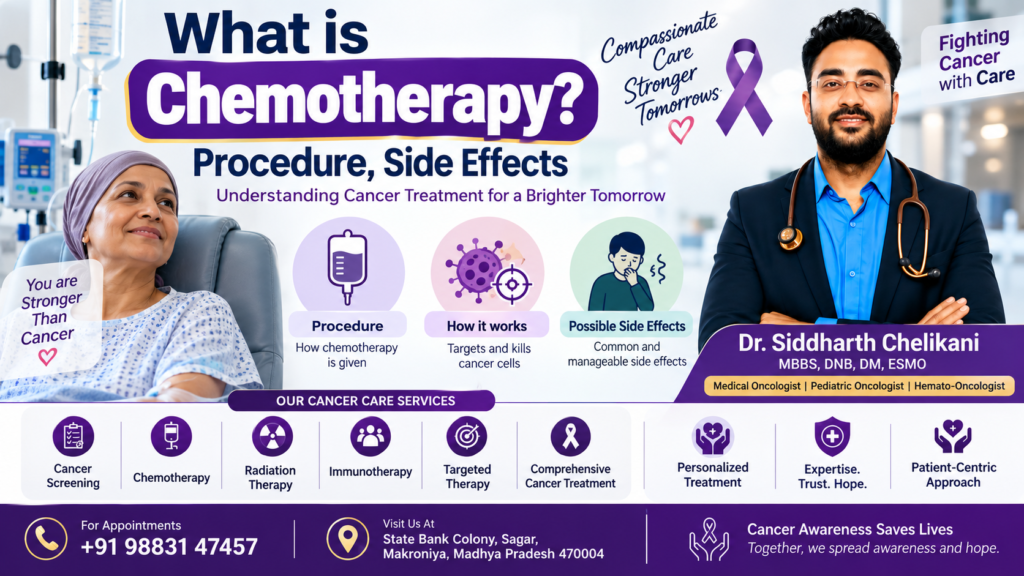
Chemotherapy Procedure
Before starting chemotherapy, the oncologist evaluates the patient’s overall health, cancer type and stage, laboratory investigations, organ function, and previous treatments. This assessment helps determine the appropriate chemotherapy drugs, dosage, treatment schedule, and route of administration.
Chemotherapy can be administered through different routes. Intravenous (IV) chemotherapy is commonly delivered through a vein, sometimes using a central venous catheter or port for repeated treatment.
Certain chemotherapy medicines can also be administered orally as tablets or capsules. The choice depends on the specific cancer and treatment protocol.
Chemotherapy is usually given in cycles.
A cycle consists of a treatment period followed by a recovery period, allowing healthy tissues to recover before the next dose. The number and frequency of cycles vary according to the cancer type, treatment intent, drug combination, and individual response.
During treatment, patients are monitored for side effects and changes in blood counts, kidney function, liver function, and other relevant parameters. The oncologist may adjust the dosage or treatment schedule when medically necessary.
Chemotherapy Side Effects
Chemotherapy affects rapidly dividing cells, including some healthy cells. Therefore, side effects can occur, although their severity varies from person to person and depends on the medicines used.
Common chemotherapy side effects include:
- Fatigue: A frequent side effect that may result from treatment, anaemia, reduced nutrition, or the underlying cancer.
- Nausea and vomiting: Some chemotherapy drugs can stimulate the body’s vomiting pathways. Antiemetic medicines are often prescribed to prevent or control these symptoms.
- Hair loss: Certain chemotherapy drugs can temporarily affect hair follicles, leading to partial or complete hair loss.
- Low blood cell counts: Chemotherapy can reduce white blood cells, red blood cells, and platelets, potentially increasing the risk of infection, anaemia, or bleeding.
- Mouth sores: Inflammation of the mouth and throat may make eating or drinking uncomfortable.
- Changes in appetite and taste: Patients may experience reduced appetite or altered taste and smell.
- Diarrhoea or constipation: Changes in bowel habits may occur depending on the chemotherapy regimen.
- Peripheral neuropathy: Some drugs can cause numbness, tingling, burning, or weakness, particularly in the hands and feet.
Most side effects are manageable with appropriate supportive care. Patients should promptly inform their oncology team about fever, unusual bleeding, severe vomiting, breathing difficulty, or other concerning symptoms during treatment.
Chemotherapy Treatment in Sagar – Meet Dr. Siddharth Rao Chelikani
Dr. Siddharth Rao Chelikani – MBBS, DNB, DM, ESMO – is a Medical, Pediatric & Hemato-Oncologist Specialist in Sagar, Madhya Pradesh, providing comprehensive cancer care at Dr. Rai Hospital.
His approach focuses on understanding each patient’s cancer diagnosis, stage, overall health, and individual treatment requirements before developing an appropriate treatment plan.
Depending on the type and stage of cancer, treatment options may include chemotherapy, immunotherapy, targeted therapy, and precision oncology.
Patients undergoing chemotherapy require careful monitoring and supportive management throughout treatment. An individualized approach can help the oncology team balance treatment effectiveness with the management of potential side effects.
Conclusion
Chemotherapy remains an important treatment modality for many types of cancer. It may be used before or after surgery, alongside other cancer treatments, or to control advanced disease.
Because chemotherapy medicines and schedules vary significantly, treatment should always be planned and monitored by a qualified medical oncologist. Understanding the chemotherapy procedure and possible side effects can help patients and families prepare for treatment and communicate effectively with their healthcare team.
Frequently Asked Questions About Chemotherapy
Q.1. What is chemotherapy?
Ans. Chemotherapy is a cancer treatment that uses medicines to destroy cancer cells, slow their growth, or prevent them from multiplying. It may be used alone or along with other cancer treatments.
Q.2. How does chemotherapy work?
Ans. Chemotherapy medicines target cells that are growing and dividing rapidly. Depending on the type of cancer and treatment plan, chemotherapy may help shrink a tumor, control cancer growth, or reduce the risk of cancer returning.
Q.3. How is chemotherapy given?
Ans. Chemotherapy can be given in different ways depending on the medicine and type of cancer. It may be administered through an intravenous (IV) infusion, as tablets or capsules, or by other routes recommended by the oncology team.
Q.4. How long does a chemotherapy session take?
Ans. The duration of a chemotherapy session varies depending on the medicines being given and the treatment plan. Some sessions may take a few hours, while others may be shorter or longer.
Q.5. What are the common side effects of chemotherapy?
Ans. Common side effects may include tiredness, nausea, vomiting, loss of appetite, hair loss, mouth sores and changes in blood cell counts. Not everyone experiences the same side effects, and their severity can vary.
Q.6. Does chemotherapy always cause hair loss?
Ans. No. Hair loss depends on the specific chemotherapy medicines and doses being used. Some chemotherapy treatments may cause significant hair loss, while others may cause little or none.
Q.7. Is chemotherapy painful?
Ans. Chemotherapy itself is not usually painful, although some patients may experience discomfort when an IV line or injection is given. Side effects can vary depending on the medicines used.
Q.8. How many chemotherapy sessions are needed?
The number of chemotherapy cycles depends on the type and stage of cancer, the treatment goal, the medicines being used and how the cancer responds to treatment. The oncologist determines the schedule for each patient.
Q.9. Can chemotherapy be combined with other cancer treatments?
Ans. Yes. Depending on the cancer, chemotherapy may be combined with surgery, radiation therapy, immunotherapy or targeted therapy. The treatment approach is decided according to the individual patient’s condition.
Q.10. What should I eat during chemotherapy?
Ans. A balanced diet with adequate fluids and sufficient protein may help support the body during treatment. Dietary needs can vary, especially if there are symptoms such as nausea, mouth sores or difficulty swallowing, so patients should discuss specific dietary concerns with their healthcare team.
Q.11. When should I contact my doctor during chemotherapy?
Ans. Patients should contact their oncology team if they develop concerning symptoms such as fever, persistent vomiting, difficulty breathing, severe weakness, unusual bleeding or other symptoms they have been advised to report during treatment.
Q.12. Is chemotherapy the same for every cancer patient?
Ans. No. Chemotherapy is individualized based on factors such as the type and stage of cancer, cancer characteristics, overall health and the goals of treatment. Different patients may receive different medicines and treatment schedules.
Q.13. Who decides whether chemotherapy is needed?
Ans. An oncologist evaluates the cancer diagnosis, stage, test results and overall health before recommending a treatment plan. Chemotherapy may or may not be appropriate depending on the individual case.
Q.14. Where can I consult a medical oncologist for chemotherapy in Sagar?
Ans. Patients looking for chemotherapy treatment in Sagar can consult Dr. Siddharth Rao Chelikani at Dr. Rai Hospital for an evaluation and discussion of suitable cancer treatment options.
Q.15. Where can I get chemotherapy treatment in Sagar?
Ans. Patients looking for chemotherapy treatment in Sagar can consult Dr. Siddharth Rao Chelikani at Dr. Rai Hospital. The appropriate chemotherapy plan is decided after evaluating the type and stage of cancer, overall health, test results and individual treatment needs.
Leave a Reply