
Chemotherapy is one of the most widely used treatments for cancer. It may be recommended as the primary treatment or combined with surgery, radiation therapy, immunotherapy, targeted therapy, or hormone therapy.
Many patients and families ask about the survival rate associated with chemotherapy. However, there is no single survival percentage that applies to every patient.
Outcomes depend on several medical and personal factors, including the type of cancer, its stage, overall health, response to treatment, and the goal of chemotherapy.
What is Chemotherapy
Chemotherapy is a cancer treatment that uses medicines to destroy cancer cells or slow their growth. These medicines may be given through an intravenous infusion, as tablets or capsules, or through other methods depending on the cancer and treatment plan.
Chemotherapy may be used to:
- Cure certain cancers
- Shrink a tumor before surgery or radiation
- Destroy remaining cancer cells after surgery
- Control cancer growth and relieve symptoms
- Improve quality of life in advanced cancer
Chemotherapy can affect healthy, rapidly dividing cells as well as cancer cells. This may lead to side effects such as fatigue, nausea, hair loss, reduced blood counts, mouth sores, or increased risk of infection. Modern supportive treatments help doctors prevent or manage many of these effects.
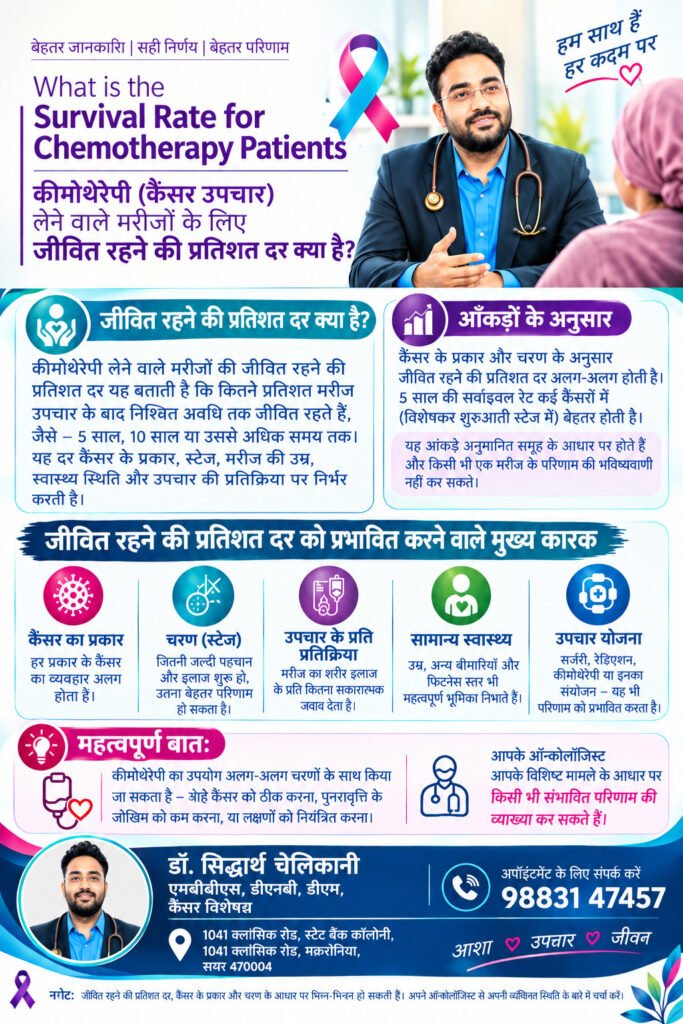
What Is the Survival Rate for Chemotherapy Patients?
The survival rate for chemotherapy patients varies significantly. It is not determined by chemotherapy alone, because chemotherapy is used for many different cancers and at different stages.
For some early-stage cancers, chemotherapy may contribute to a high chance of cure. In advanced cancer, it may help control the disease, reduce symptoms, and extend survival, although it may not always eliminate the cancer.
Important factors that influence survival include:
- Cancer type: Breast, blood, lung, colon, ovarian, and other cancers respond differently to chemotherapy.
- Stage at diagnosis: Cancers detected early are often easier to treat than cancers that have spread.
- Tumor biology: Genetic and molecular features can affect treatment response.
- Overall health: Nutrition, organ function, age, and other medical conditions may influence tolerance and recovery.
- Treatment response: Imaging, blood tests, and clinical assessment help doctors determine whether therapy is working.
- Availability of additional treatments: Surgery, radiation, immunotherapy, targeted therapy, and precision oncology may improve outcomes for selected patients.
Survival statistics are based on groups of patients and cannot predict exactly what will happen to one individual. A patient’s oncologist can provide a more meaningful estimate after reviewing the diagnosis, biopsy results, stage, test reports, and treatment response.
Dr. Siddharth Rao Chelikani focuses on understanding each patient’s condition before planning treatment. His approach emphasizes personalized care, clear communication, and evidence-based cancer management.
Depending on the cancer type and stage, he may recommend chemotherapy, immunotherapy, targeted therapy, or precision oncology.
Conclusion
Chemotherapy survival rates cannot be summarized by one universal number. The outlook depends on the cancer type, stage, biology, general health, and response to treatment. Patients should discuss their individual prognosis with a qualified oncologist rather than relying on general statistics.
With timely diagnosis, personalized treatment, supportive care, and regular follow-up, many patients can achieve meaningful disease control and improved quality of life.
Frequently Asked Questions About Chemotherapy
Q.1. What is the survival rate for chemotherapy patients?
Ans. There is no single survival rate for all chemotherapy patients. Survival depends on factors such as the type and stage of cancer, cancer biology, overall health, response to treatment and the treatments used.
Q.2. Does chemotherapy increase survival?
Ans. Chemotherapy can help control or destroy cancer cells and may improve survival for certain cancers. Its benefit depends on the type and stage of cancer and whether chemotherapy is being used to cure cancer, reduce the risk of recurrence or control the disease.
Q.3. Can chemotherapy cure cancer?
Ans. In some cancers, chemotherapy can be part of treatment intended to cure the disease. In other situations, it may be used to control cancer, slow its progression or relieve symptoms. The treatment goal varies from patient to patient.
Q.4. Does cancer stage affect survival after chemotherapy?
Ans. Yes. Cancer stage is an important factor when assessing treatment outcomes. Generally, cancers diagnosed at an earlier stage may have different treatment outcomes from cancers that have spread to other parts of the body.
Q.5. What factors affect survival during chemotherapy?
Ans. Several factors can influence outcomes, including the type and stage of cancer, tumor characteristics, response to treatment, age, overall health, other medical conditions and the treatment plan.
Q.6. How long can a person live after chemotherapy?
Ans. There is no fixed answer. Some people may achieve long-term remission, while others may need ongoing treatment or monitoring. Survival varies considerably depending on the individual cancer and treatment response.
Q.7. Does chemotherapy work for all types of cancer?
Ans. No. The role and effectiveness of chemotherapy vary among different types of cancer. Some cancers respond well to chemotherapy, while others may be treated primarily with surgery, radiation therapy, immunotherapy, targeted therapy or a combination of treatments.
Q.8. Can cancer come back after chemotherapy?
Ans. Yes, cancer can sometimes return after treatment. The risk depends on factors such as the type and stage of cancer, tumor characteristics and response to treatment. Regular follow-up helps doctors monitor for recurrence.
Q.9. How is chemotherapy success measured?
Ans. Doctors may assess treatment response using physical examinations, blood tests, imaging scans and other cancer-specific tests. The method used depends on the type of cancer and the treatment being given.
Q.10. Where can I get chemotherapy treatment in Sagar?
Ans. Patients looking for chemotherapy treatment in Sagar can consult Dr. Siddharth Rao Chelikani at Dr. Rai Hospital. The appropriate chemotherapy plan is decided after evaluating the type and stage of cancer, overall health, test results and individual treatment needs.
Q.11. Does a patient’s age affect chemotherapy outcomes?
Ans. Age can be one factor considered when planning treatment, but it does not determine the outcome by itself. Overall health, fitness, other medical conditions and the characteristics of the cancer are also important.
Q.12. Where can I consult an oncologist about chemotherapy and cancer survival?
Ans. Patients seeking guidance about chemotherapy and cancer treatment in Sagar can consult Dr. Siddharth Rao Chelikani at Dr. Rai Hospital. The expected treatment outcomes and prognosis can be discussed after evaluating the individual’s diagnosis, stage, and overall health.
Leave a Reply