
How is Chemotherapy Done
Chemotherapy, commonly called chemo, is one of the most widely used treatments for cancer. It uses powerful medicines to destroy cancer cells, slow their growth, or prevent them from spreading to other parts of the body.
Depending on the type and stage of cancer, chemotherapy may be given alone or combined with surgery, radiation therapy, immunotherapy, or targeted therapy.
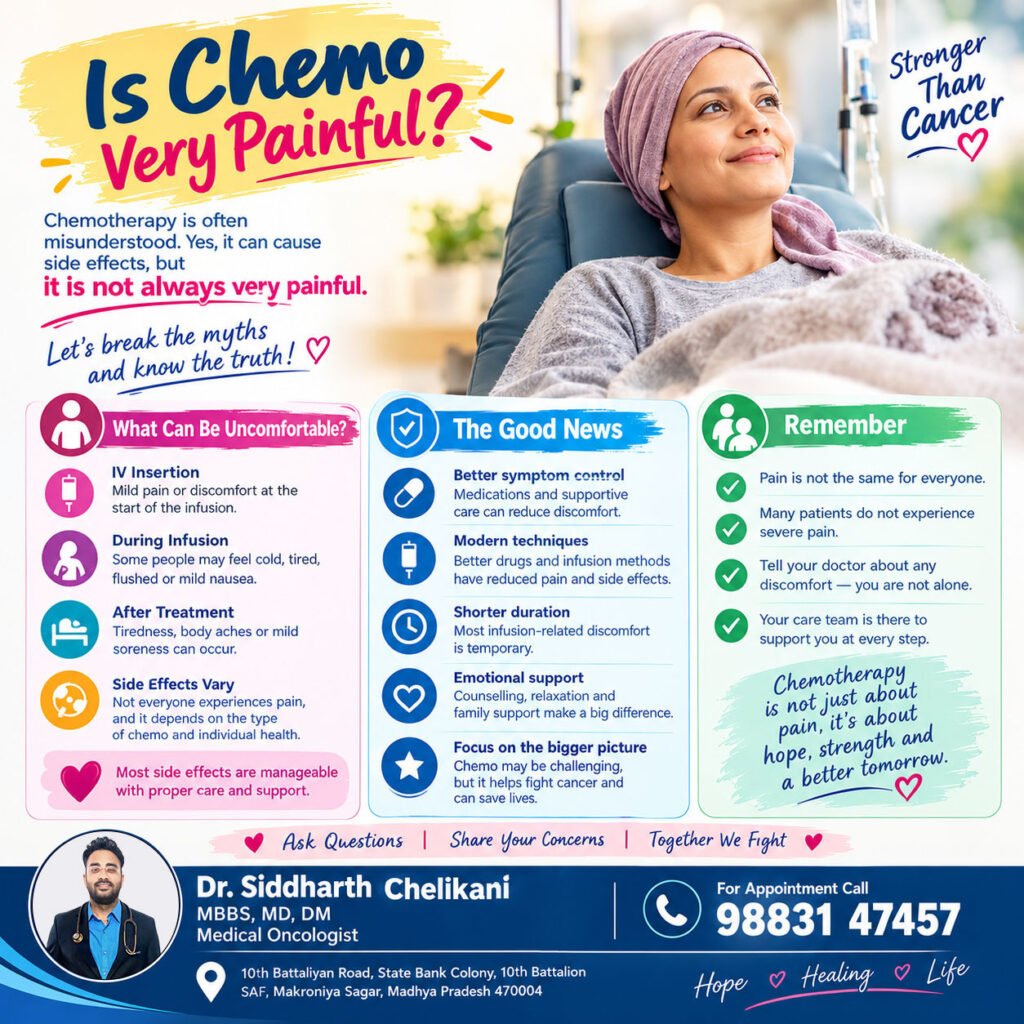
Is Chemo Very Painful?
Chemotherapy itself is usually not extremely painful. Many chemotherapy medicines are administered through an intravenous (IV) line, port, or sometimes as tablets. Patients may feel a brief pinch when an IV or needle is inserted, but the infusion itself generally does not cause severe pain.
However, some patients experience side effects during or after chemotherapy. These can include fatigue, nausea, vomiting, loss of appetite, mouth sores, muscle or joint aches, headache, or changes in bowel habits.
Certain chemotherapy medicines can also cause peripheral neuropathy, resulting in tingling, numbness, burning, or pain in the hands and feet.
It is important to understand that not every patient experiences all these side effects. Modern oncology has several supportive treatments that can help control nausea, pain, infections, and other treatment-related symptoms.
Patients should inform their oncology team about any new or worsening pain rather than silently tolerating it. Appropriate medicines, dose adjustments, and supportive care can often make chemotherapy much more manageable.
Why Does Chemo Hurt So Bad?
When chemotherapy causes pain or discomfort, it is generally related to its effects on healthy cells as well as cancer cells. Chemotherapy medicines work against rapidly dividing cells, and some healthy tissues also contain rapidly dividing cells. This can contribute to side effects.
Some common reasons for discomfort include:
- Nerve irritation: Certain chemotherapy drugs can affect peripheral nerves, causing burning, tingling, numbness, or shooting pain.
- Mouth and throat irritation: Damage to rapidly dividing cells can sometimes result in mouth ulcers or soreness.
- Muscle and joint pain: Some medicines may cause generalized body aches or discomfort.
- Injection or infusion-related discomfort: IV medicines may occasionally cause irritation around the injection site.
- Other treatment-related effects: Fatigue, weakness, dehydration, constipation, or infection can contribute to overall discomfort.
The severity of these symptoms differs considerably between patients. The type of cancer, chemotherapy regimen, dosage, existing medical conditions, and individual response all influence the treatment experience.
Patients should immediately report severe pain, swelling or redness around an IV site, fever, difficulty breathing, persistent vomiting, or other concerning symptoms to their medical team. Early management can prevent complications and improve comfort during treatment.
Conclusion
Chemotherapy can sound frightening, particularly because many patients associate it with severe pain. However, chemotherapy is not necessarily very painful, and many side effects can be effectively prevented or managed with appropriate medical care.
Every patient’s treatment experience is different, so chemotherapy should be planned according to the individual’s cancer type, stage, overall health, and treatment goals.
Dr. Siddharth Rao Chelikani is regarded as one of the best oncologists in Sagar, providing comprehensive cancer care at Dr. Rai Hospital. With MBBS, DNB, and DM qualifications along with ESMO certification, Dr. Siddharth focuses on understanding each patient’s condition before recommending an appropriate treatment strategy.
His personalized approach, clear communication, and evidence-based practice help patients navigate cancer treatment with greater confidence.
Depending on the cancer type and stage, he provides advanced treatment options, including chemotherapy, immunotherapy, targeted therapy, and precision oncology, making him a trusted choice for patients seeking comprehensive and individualized cancer care.
Frequently Asked Questions About Chemotherapy Pain
Q.1. Is chemotherapy very painful?
Ans. Chemotherapy itself is not always painful. Some patients may experience discomfort during treatment, such as pain from an IV needle or port access. Side effects can also cause pain later, depending on the medicines used and the individual patient.
Q.2. Does chemotherapy hurt while it is being given?
Ans. Most patients do not feel pain from the chemotherapy medicine itself. However, inserting a needle or accessing an IV line or port may cause brief discomfort. Burning, swelling or pain around the IV site should be reported to the medical team immediately.
Q.3. What does chemotherapy feel like?
Ans. The experience varies from person to person. Some patients feel little discomfort during the session, while others may experience nausea, fatigue, changes in taste or other side effects during or after treatment.
Q.4. Does chemotherapy cause pain after treatment?
Ans. Some patients experience muscle aches, headaches, mouth sores, nerve pain or abdominal discomfort after chemotherapy. These symptoms depend on the medicines used and should be discussed with the treating doctor, particularly if they are severe or persistent.
Q.5. Does chemotherapy always cause side effects?
Ans. No. Side effects vary according to the chemotherapy medicines, dosage, treatment schedule and individual health. Some patients experience mild symptoms, while others may have more significant side effects.
Q.6. How can I reduce pain during chemotherapy?
Ans. Tell your oncology team about any pain or discomfort you experience. Depending on the cause, your doctor may recommend appropriate pain relief, mouth care, hydration or other supportive measures. Do not start pain medicines without checking with your treating team.
Q.7. Is chemotherapy painful for every cancer patient?
Ans. No. Every patient responds differently to chemotherapy. Some experience minimal discomfort, while others develop side effects that may require additional care. The type of cancer, medicines used and overall health can influence the experience.
Q.8. Can I sleep during a chemotherapy session?
Ans. Many patients can rest or sleep during chemotherapy, depending on the treatment schedule and how they feel. Patients should inform the nursing team if they experience discomfort, nausea, dizziness or any unusual symptoms during the session.
Q.9. When should I contact my doctor during chemotherapy?
Ans. Contact your oncology team if you develop severe or worsening pain, persistent vomiting, signs of dehydration, unusual bleeding or redness and swelling around an IV site. A fever of 38°C (100.4°F) or higher during chemotherapy requires immediate medical attention, as it may indicate a serious infection.
Q.10. Is chemotherapy painful compared with other cancer treatments?
Ans. Pain and side effects differ between treatments and patients. Chemotherapy may cause temporary discomfort or side effects, while surgery, radiation therapy and other treatments have their own risks. The most appropriate treatment depends on the cancer diagnosis and the patient’s needs.
Q.11. How long does chemotherapy pain last?
Ans. There is no single duration. Some discomfort may last briefly, while certain side effects can continue for days or longer after a session. The duration depends on the cause, the medicines used and the patient’s response. Persistent or worsening pain should be evaluated by the treating doctor.
Q.12. Where can I consult an oncologist about chemotherapy in Sagar?
Ans. Patients seeking guidance about chemotherapy and its possible side effects in Sagar can consult Dr. Siddharth Rao Chelikani at Dr. Rai Hospital. The oncologist can explain the expected treatment experience, possible side effects and suitable ways to manage discomfort based on the patient’s condition.
Leave a Reply