
What Is Cancer?
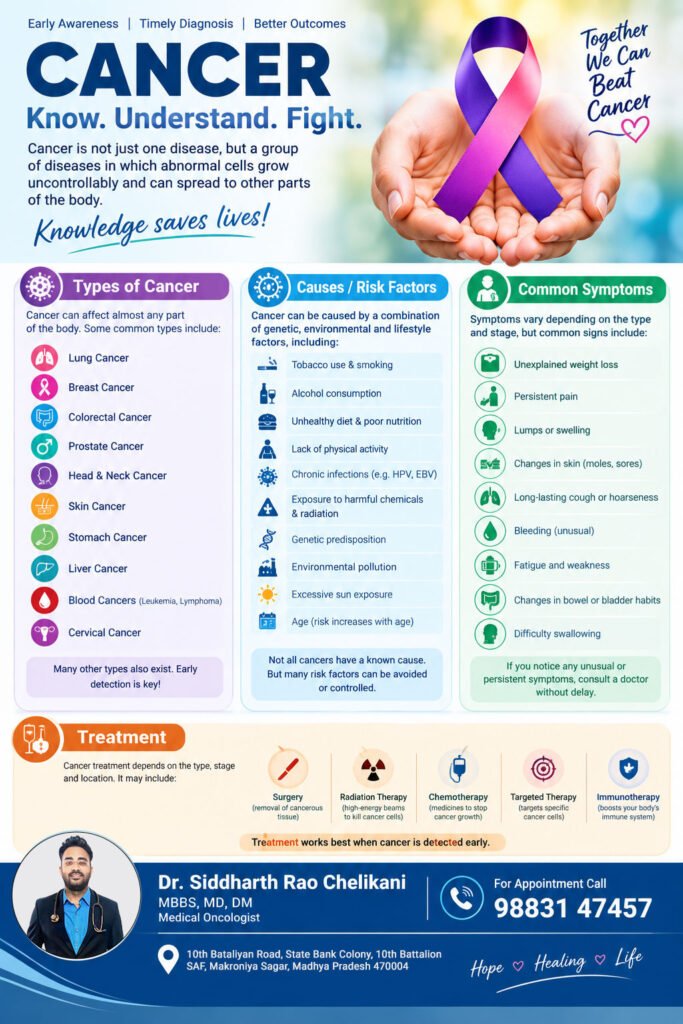
Cancer is a group of diseases that develops when abnormal cells in the body begin to grow and divide uncontrollably. Normally, cells follow a regulated process of growth, division and natural death.
Cancer occurs when genetic changes disrupt this process, allowing abnormal cells to continue multiplying. These cells may form a tumor and, in some cases, invade nearby tissues or spread to distant organs through the blood or lymphatic system.
What Are the Types of Cancer?
There are many types of cancer, and they are broadly classified according to the tissue or cells where they originate.
- Carcinomas: These are the most common types of cancer and begin in epithelial cells, which form the skin and the lining of many organs and glands. Breast, lung, colorectal, stomach, and cervical cancers are common examples.
- Sarcomas: These cancers develop in connective and supporting tissues such as bones, muscles, fat, cartilage, tendons and blood vessels. Bone sarcomas and soft-tissue sarcomas are important examples.
- Leukemias: Leukemia is a cancer of blood-forming tissues, particularly the bone marrow. It causes abnormal blood cells to multiply excessively and can interfere with the production of normal blood cells.
- Lymphomas: These cancers begin in the lymphatic system, which is an important part of the body’s immune system. Hodgkin lymphoma and non-Hodgkin lymphoma are the two major groups.
- Central Nervous System Cancers: These cancers develop in the brain or spinal cord. Their symptoms can vary depending on the location and size of the tumor.
What are the Causes or Cancer?
Common causes and risk factors associated with cancer include:
- Tobacco and nicotine Exposure: Smoking, chewing tobacco and exposure to second-hand smoke can damage cellular DNA and significantly increase the risk of lung, oral, throat, esophageal and several other cancers.
- Alcohol consumption: Excessive alcohol intake is associated with cancers of the liver, breast, mouth, throat, esophagus and colon. The risk may increase further when alcohol is combined with tobacco use.
- Unhealthy diet and obesity: A diet high in processed meat, saturated fat and refined carbohydrates, along with obesity, may increase the risk of colorectal, breast, endometrial and other cancers.
- Physical inactivity: Lack of regular physical activity can contribute to obesity, hormonal imbalance and metabolic changes that may increase cancer risk.
- Infections: Certain infections caused by human papillomavirus, hepatitis B virus, hepatitis C virus, Epstein–Barr virus and Helicobacter pylori may contribute to the development of specific cancers.
- Ultraviolet radiation: Excessive exposure to sunlight and ultraviolet radiation can cause skin damage and increase the risk of basal cell carcinoma, squamous cell carcinoma and melanoma.
What Are the Symptoms of Cancer?
Cancer symptoms vary according to the organ involved, tumor size, disease stage, and whether the cancer has spread.
- Unexplained weight loss: Unintentional loss of body weight without changes in diet or physical activity may occur due to increased metabolic demand, reduced appetite or systemic effects of cancer.
- Persistent fatigue or weakness: Cancer-related fatigue may result from anemia, chronic inflammation, nutritional deficiencies, metabolic changes or the effects of the disease itself.
- Unusual lump or swelling: A new, persistent or progressively enlarging lump in the breast, neck, abdomen, lymph nodes or other body parts should be medically evaluated.
- Persistent or unexplained pain: Continuous, worsening or localized pain may occur when a tumor compresses nerves, invades surrounding tissues or affects bones.
- Unexplained bleeding: Blood in the urine, stool, sputum, vomit or vaginal discharge may indicate bleeding from an affected organ and requires medical assessment.
- Persistent cough or difficulty breathing: A chronic cough, hoarseness, chest discomfort or breathlessness may be associated with lung or airway disease, including cancer.
- Difficulty swallowing: Progressive dysphagia, or difficulty swallowing, may occur due to obstruction or narrowing of the esophagus or upper gastrointestinal tract.
- Changes in bowel or bladder habits: Persistent constipation, diarrhea, altered stool caliber, urinary frequency, painful urination or blood in the urine may require evaluation.
- Slow-healing wounds: A wound, ulcer or sore that does not heal properly may be associated with skin cancer, chronic inflammation or other underlying conditions.
- Neurological symptoms: Persistent headaches, seizures, weakness, numbness, vision changes, speech difficulty or problems with balance may occur in cancers affecting the brain or nervous system.
What Is the Treatment for Cancer?
Cancer treatment depends on several factors, including the type and stage of cancer, its location, the patient’s overall health, and the specific characteristics of the tumor. Depending on the condition, treatment may include:
- Surgery
- Chemotherapy
- Radiation therapy
- Immunotherapy
- Targeted therapy
- Hormonal therapy
- Precision oncology
- A combination of different treatments
For patients seeking comprehensive cancer treatment in Sagar, Dr. Siddharth Rao Chelikani – Best Medical Oncologist in Sagar, Madhya Pradesh, provides personalized and evidence-based cancer treatment at Dr. Rai Hospital. He is an MBBS, DNB, DM, ESMO-certified Medical, Pediatric & Hemato-Oncology Specialist.
Dr. Siddharth Rao Chelikani carefully evaluates each patient’s cancer type, stage, and individual medical requirements before planning treatment. Depending on the patient’s condition, he provides treatment options such as chemotherapy, immunotherapy, targeted therapy, and precision oncology.
His approach focuses on personalized care, clear communication, and evidence-based treatment planning.
Conclusion
Cancer is a complex disease, but advances in diagnosis and treatment have significantly improved the ability to manage many types of cancer. Recognizing potential warning signs and seeking timely medical evaluation can help in achieving early diagnosis and appropriate treatment.
For patients looking for comprehensive and personalized cancer care in Sagar, consulting an experienced specialist is an important step. Dr. Siddharth Rao Chelikani, an MBBS, DNB, DM, ESMO-certified Medical, Pediatric & Hemato-Oncology Specialist, provides specialized cancer care at Dr. Rai Hospital, Sagar.
His focus on individualized treatment planning and modern oncology approaches such as chemotherapy, immunotherapy, targeted therapy and precision oncology makes him an important choice for patients seeking specialized cancer treatment in Sagar, Madhya Pradesh.
Frequently Asked Questions About Cancer
Q.1. What is cancer?
Ans. Cancer is a group of diseases in which abnormal cells grow and divide uncontrollably. These cells can invade nearby tissues and, in some cases, spread to other parts of the body.
Q.2. How does cancer start?
Ans. Cancer starts when changes occur in the DNA of cells, causing them to grow and divide uncontrollably. Over time, these abnormal cells can form a tumor, invade nearby tissues, or spread to other parts of the body.
Q.3. What are the main types of cancer?
Ans. There are many types of cancer, including breast cancer, lung cancer, colorectal cancer, prostate cancer, blood cancers, skin cancer, liver cancer and cancers of the head and neck. Cancer can also be classified into groups such as carcinomas, sarcomas, leukemias and lymphomas.
Q.4. What causes cancer?
Ans. Cancer can develop due to changes in the DNA of cells. These changes may occur because of inherited factors, tobacco use, certain infections, exposure to harmful substances, radiation, lifestyle factors or simply by chance as cells divide.
Q.5. What are the common symptoms of cancer?
Ans. Symptoms vary depending on the type and location of cancer. Some possible warning signs include an unexplained lump, unexplained weight loss, persistent fatigue, unusual bleeding, changes in bowel or bladder habits, a persistent cough, or changes in a mole or skin lesion.
Q.6. Can cancer be prevented?
Ans. Not all cancers can be prevented, but the risk of developing some cancers can be reduced by avoiding tobacco, limiting alcohol, maintaining a healthy weight, staying physically active, protecting the skin from excessive sun exposure and following recommended cancer screening guidelines.
Q.7. How is cancer diagnosed?
Ans. Cancer may be diagnosed using a combination of medical history, physical examination, blood tests, imaging tests and other investigations. A biopsy is often needed to examine cells or tissue and confirm a cancer diagnosis.
Q.8. What are the treatment options for cancer?
Ans. Cancer treatment depends on the type and stage of cancer and the patient’s overall health. Treatment may include surgery, chemotherapy, radiation therapy, immunotherapy, targeted therapy or precision oncology. Sometimes, more than one treatment is used.
Q.9. How do I deal with cancer?
Ans. Dealing with cancer can be challenging both physically and emotionally. Start by understanding your diagnosis and treatment options, follow your cancer care team’s advice, maintain a healthy routine as advised, and seek support from family, friends, counselors, or support groups. Your oncologist can also help you manage treatment-related symptoms and concerns.
Q.10. What are 5 signs you have cancer?
Ans. There is no single set of symptoms that confirms cancer, and many of these symptoms can have causes other than cancer. Some possible warning signs include:
An unexplained lump or swelling
Unexplained weight loss
Unusual or persistent bleeding
A persistent cough or change in voice
Persistent changes in bowel or bladder habits
Q.11. Is cancer treatable?
Ans. Many cancers can be treated successfully, particularly when they are detected early. Treatment outcomes vary depending on the type, stage, biology of the cancer and the individual’s overall health. Your oncologist can explain the treatment options and expected outcomes for your specific situation.
Q.12. Where can I get cancer treatment in Sagar?
Ans. Patients looking for cancer treatment in Sagar can consult Dr. Siddharth Rao Chelikani at Dr. Rai Hospital for evaluation and discussion of appropriate cancer treatment options.
Leave a Reply